notice - The article on Shirakawa-go has been published.
notice - The article on Shirakawa-go has been published.



[Differences between Shirakawa-go and Gokayama] Comparing the charms of the Gassho-style villages! Which one should you go to?

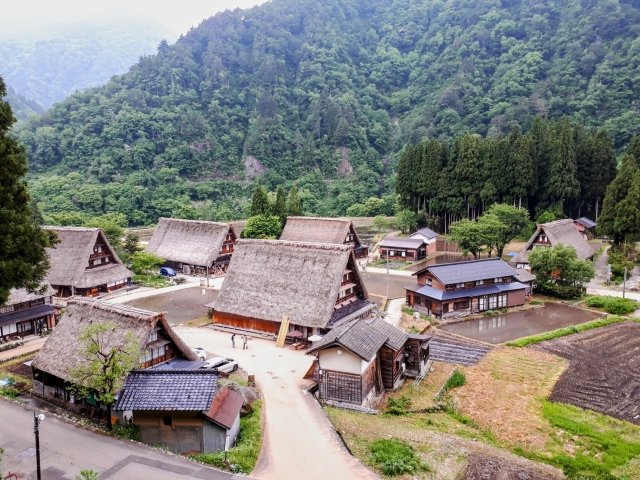
The World Heritage-registered towns of Shirakawa-go and Gokayama are known as Gassho-style villages that evoke the original Japanese landscape. However, the two villages have differences in location, atmosphere, and tourism style.
In this article, we'll compare the features of each and give you a clear guide on which one to go for.
What is Gokayama? | How to read and basic information
Gokayama is a mountainous region located in Nanto City, Toyama Prefecture, and two settlements, Ainokura and Suganuma, are registered as World Heritage Sites.
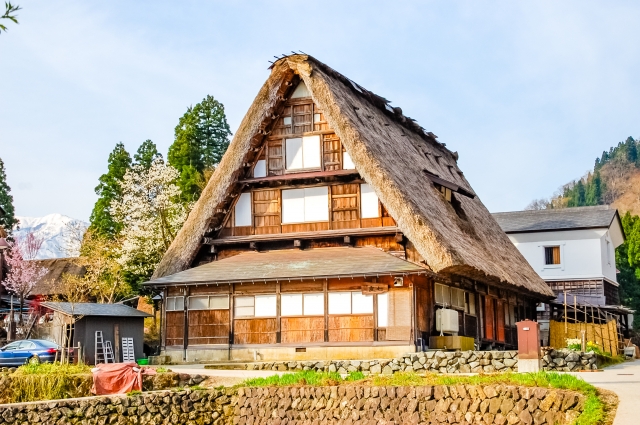
With Shirakawa-go"Gassho-style Villages of Shirakawa-go and Gokayama"It was recognised as a UNESCO World Heritage Site in 1995.
Location of Shirakawa-go and Gokayama
Shirakawa-go is located in Shirakawa Village, Ono County, Gifu Prefecture, and is mainly known for the Ogimachi settlement.
It takes about 40 minutes by car between the two, so if you are sightseeing in your own car, you can easily visit both. However, if you are okay with either Gokayama or Shirakawa-go, Shirakawa-go is recommended as it is larger.
Differences between Shirakawa-go and Gokayama Gassho-style houses
Here's a brief summary of the differences between the two.
Roof inclination angleFeatures
Shirakawa-go Gassho-style houses: They are built on a gentle slope, facing north to south, to make the most of the sunlight and melt the snow.
Gokayama Gassho-style houses... They are steeper than Shirakawa-go. They are designed to make it easier for heavy snow to slide off.
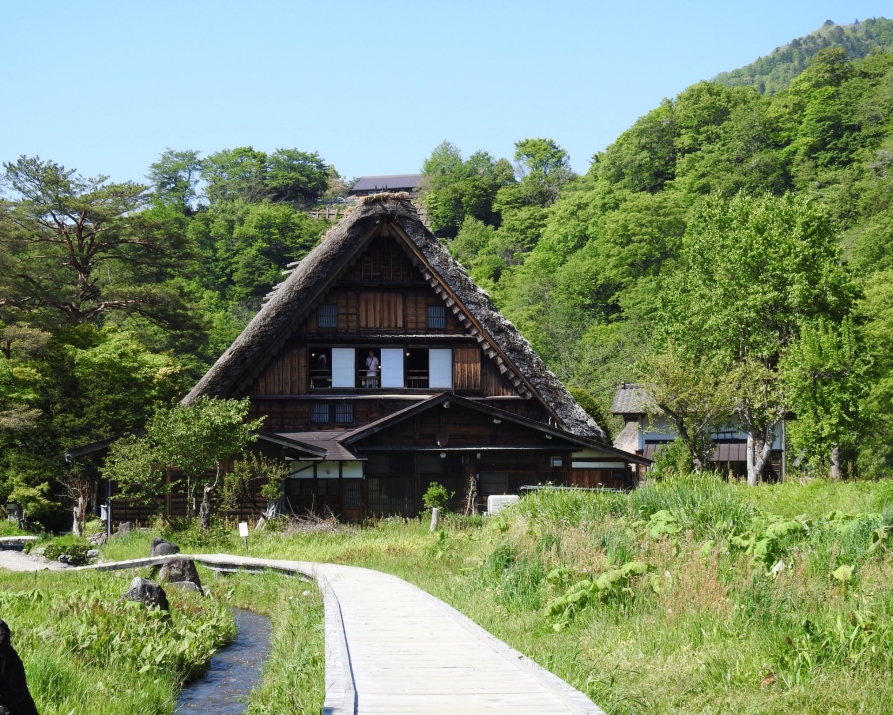
Building orientation and placementFeatures
Shirakawa-go Gassho-style houses: the entrance is on the slope of the roof. The village is neatly lined up from north to south, giving it a sense of unity.
Gokayama Gassho-style: The entrance is located directly in front of the gassho part. It was built freely along the topography, creating a natural layout.
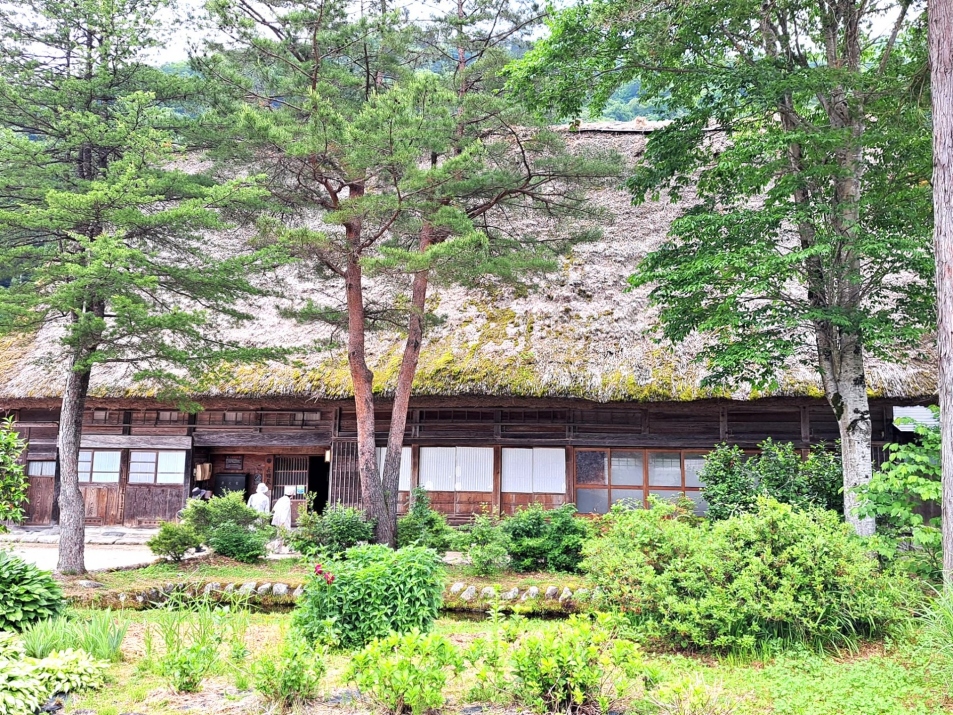
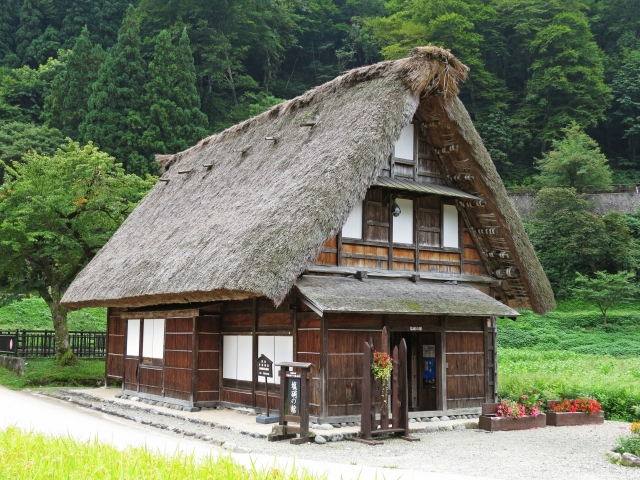
Roofing method and size
Shirakawa-go's Gassho-style houses...Through the villagers' mutual assistance, a large group of people re-thatched one side of the roof at once.
Gokayama Gassho-style house...A small team of people divided one side of the roof and re-roofed it.
Village size and tourism situation
Shirakawa-go Gassho-style houses...A large settlement of over 100 buildings of various sizes, it is becoming a tourist destination.
Gokayama Gassho-style houses...Relatively few in size and with few tourists, the atmosphere of a quiet mountain village remains.
Why the Gassho-style houses of the two are different
The differences between the Gassho-style houses in Shirakawa-go and Gokayama are mainly due to differences in the size of the local settlements, natural environment, and historical background.
Snow quality:The snow in Gokayama is wetter and heavier than in Shirakawa-go, so the emphasis is on removing it rather than melting it.
industry:While Shirakawa-go was a thriving town for sericulture and made use of attics, Gokayama developed its own unique industrial culture including gunpowder production and washi paper making.
Thatched roof:There are differences in the size of the villages, the amount of thatch secured, and the systems of cooperation.
Which one is better? Comparing the sightseeing differences
Shirakawa-go has well-developed tourist facilities, including observation decks, restaurants, and parking lots. It is easily accessible and can accommodate large bus tours. Meanwhile, Gokayama is smaller and quieter, making it an ideal environment for solo travelers and photographers.
For full-on sightseeing, visit Shirakawa-go
Considering the size of the village and the completeness of the surrounding facilities, Shirakawa-go has the advantage. If you want to do a lot of sightseeing in about half a day, Shirakawa-go is a good choice.
Gokayama: Quiet and Enjoyable
Gokayama, with its few tourists and simple atmosphere, is perfect for those who want to spend a relaxing time. Mornings and evenings in particular are precious times when you can experience the daily life of the locals.
Of course, it is possible to visit both in one day.
If you can travel efficiently, you can visit both Shirakawa-go and Gokayama in one day. Even if you don't have a car, you can enjoy a more fulfilling tour of the World Heritage sites by using the World Heritage Bus, which will be described later.
Access to Gokayama
How to get to Gokayama is as follows:
I have written separate instructions for how to access the area from surrounding cities, but if you are coming from Tokyo or Osaka, you will need to go via Toyama or Kanazawa.
Access from Nagoya
🚌Access by express bus(About 2.5 hours)
Nagoya Midland Square
⇩Express bus "Kitokito Liner" for about 2.5 hours.
Gokayama Interchange Bus Stop
⇩ National Route 156, about 300 meters on foot
Suganuma Gassho Style Village
🚗 Access by car(About 2.5 hours)
Nagoya
⇩ Nagoya Expressway approx. 20 minutes
Ichinomiya Interchange
⇩ Meishin Expressway approx. 10 minutes
Ichinomiya Junction
⇩ Tokai-Hokuriku Expressway approx. 2 hours
Gokayama Interchange
Access from Toyama
🚌Access by bus and train(About 2 hours)
Toyama Station
⇩ JR Johana Line etc. Approx. 75 minutes
Johana Station
⇩ World Heritage Bus Approx. 25 minutes
Ainokuraguchi Bus Stop
⇩About 8 minutes on foot
Ainokura Gassho Style Village
🚗 Access by car(About 1 hour)
Toyama
⇩National Route 41, about 10 minutes
Toyama Interchange
⇩ Hokuriku Expressway Approx. 15 minutes
Oyabe Tonami Junction
⇩ Tokai-Hokuriku Expressway, about 20 minutes
Gokayama Interchange
Access from Kanazawa
🚌Access by bus(About 1 hour)
Kanazawa Station
⇩Express bus "Gokayama Suganuma Hokuriku Railway Bus "About 1 hour
Gokayama Suganuma Bus Stop
⇩ National Route 156, about 300 meters on foot
Suganuma Gassho Style Village
🚗 Access by car(About 1 hour)
Kanazawa
⇩ Hokuriku Expressway approx. 30 minutes
Oyabe Tonami Junction
⇩ Tokai-Hokuriku Expressway, about 20 minutes
Gokayama Interchange
Access from Takayama
🚌Access by bus(Approx. 1 hour 30 minutes)
Takayama Nohi Bus Terminal
⇩Express bus "Nohi Hokuriku Railway Expressway Bus " Approximately 50 minutes
Shirakawago Bus Terminal
⇩ World Heritage Bus Approx. 30 minutes
Suganuma bus stop
⇩About 5 minutes on foot
Suganuma Gassho Style Village
🚗 Access by car(Approx. 1 hour 10 minutes)
Takayama
⇩General road approximately 10 minutes
Takayama Interchange
⇩ Takayama Kiyomi Road Approx. 25 minutes
Hida Kiyomi IC
⇩ Tokai-Hokuriku Expressway approx. 35 minutes
Gokayama Interchange
What is the World Heritage Bus? | A convenient sightseeing bus that connects Shirakawa-go and Gokayama
The World Heritage Bus is a tourist route bus that connects Takaoka, Johana, and Gokayama in Toyama Prefecture with Shirakawa-go in Gifu Prefecture, and no reservation is required.
It is a very convenient means of transportation for tourists using public transportation and is an essential means of accessing each settlement.
World Heritage Bus Routes
The official timetable is shown below, but there are two bus stops you will need to use when sightseeing in Gokayama: Ainokuraguchi and Suganuma.
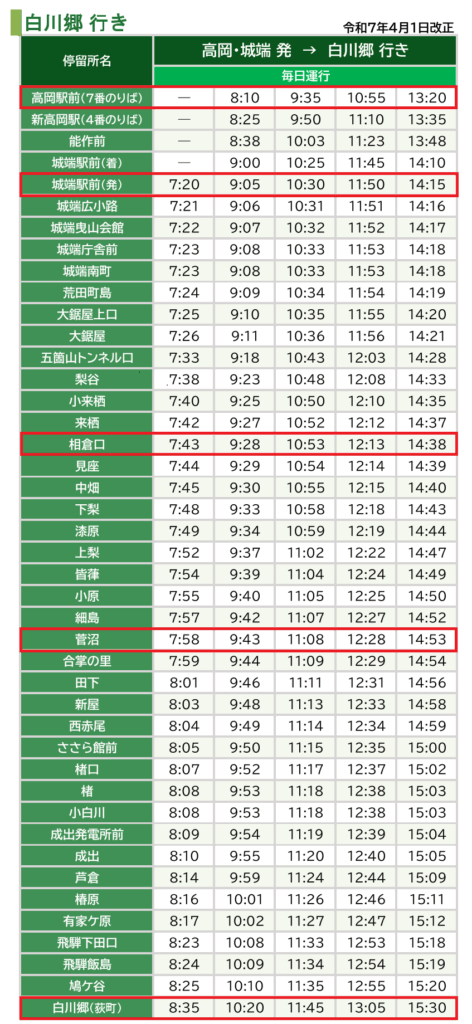
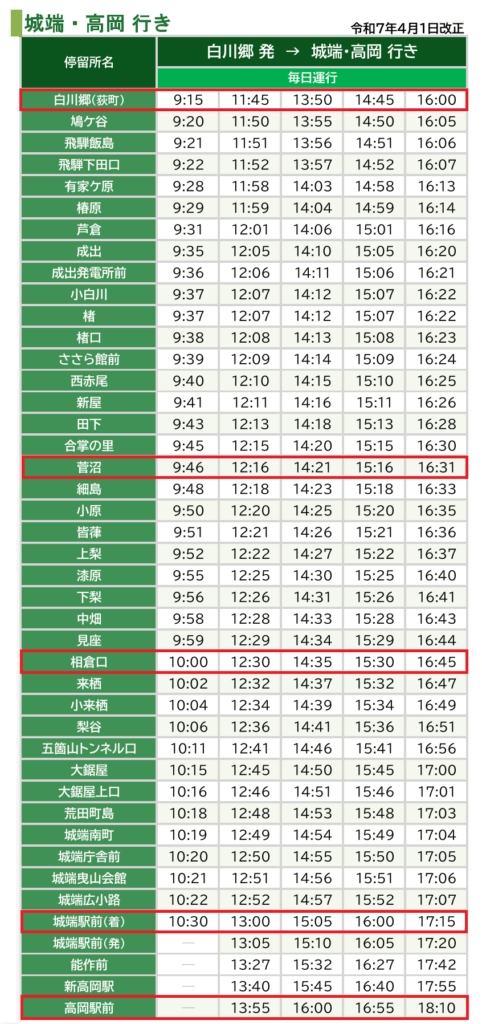
There are five trains per day on each line, and it is possible to travel between Shirakawa-go and Gokayama.
World Heritage Bus Fare
The most expensive fare on this route is 1,800 yen one way from Shirakawa-go to Takaoka Station.
The main routes are as follows:
| Representative sections | fare |
|---|---|
| Between Takaoka Station and Shirakawa-go | 1,800 yen |
| Between Takaoka Station and Ainokuraguchi | 1,000 yen |
| Between Takaoka Station and Suganuma | 1,200 yen |
| Between Suganuma and Ainokuraguchi | 570 yen |
| Between Shirakawa-go and Suganuma | 870 yen |
| Between Shirakawa-go and Ainokuraguchi | 1,300 yen |
| Between Suganuma and Ainokuraguchi | 570 yen |
In addition to this regular fare, there are also sightseeing passes available, which we will summarize below.
World Heritage Bus Free Ticket
| name | Fee |
|---|---|
| Gokayama-Shirakawago Free Ticket (Unlimited rides on all sections) | Adults: 3,500 yen Children: 1,750 yen |
| Gokayama Free Ticket (Unlimited rides between Takaoka Station and Sasarakan-mae) | Adults: 2,500 yen Children: 1,250 yen |
| One-way free ticket (Unlimited rides in one direction only from Takaoka Station or Shirakawa-go) | Adults: 2,000 yen Children: 1,000 yen |
| World Heritage 1-Day Tour Ticket (Unlimited travel between Shirakawa-go and Ainokuraguchi) *Only available at Shirakawago Bus Terminal | Adults: 2,600 yen Children: 1,300 yen |
World Heritage Bus Sales Locations
Below are the main World Heritage Bus ticket sales locations.
・Kaetsuno Bus Ticket Center
・Shin-Takaoka Station Tourist Exchange Center
・Shirakawago Bus Terminal
・Can also be purchased at convenience stores
Important points to note
The World Heritage Bus is operated by Kaetsuno Bus Co., Ltd.
Please check the official website for the latest timetables, fares, and ticket information.
Also, during the snow season (December to March), road conditions and weather may affect the timetable, so be sure to check the operating conditions before traveling.
Related page links
- For those visiting Shirakawa-go for the first time | A summary of what you should know before visiting
- A thorough explanation of the World Heritage site "Shirakawa-go": its history, charm, and the future woven by "Yui"
- Shirakawa-go Gourmet Guide | Enjoy food in seven genres
- What is Gassho-style architecture? A feature of traditional architecture remaining in Shirakawa-go
Learn the differences between Shirakawa-go and Gokayama and deepen your travels
Shirakawa-go and Gokayama are both places where Japanese history and culture are alive. Choosing one based on your purpose will greatly affect the satisfaction of your trip. Be sure to learn the differences and plan a trip to the Gassho-style villages that suit you.